Signs of an Electrical Fire in Your Home: Catch It Early
The early signs of electrical fire include a persistent fishy or burning-plastic smell, warm or discoloured outlets and…
Flickering lights, tripping breakers, dead circuits, and mystery switches. We find the actual cause instead of guessing at parts.
Electrical faults rarely announce themselves clearly. A breaker that trips once a week. Lights that dim when the furnace kicks in. Half a room dead while the other half works. The tempting fix is to swap parts until something changes. The right fix is to diagnose.
We troubleshoot electrical problems across Whitby and Durham Region with a methodical process: isolate the circuit, test at each point, find the failed connection or overloaded run, and show you what we found before fixing it. You get an explanation in plain language and a flat price for the repair, not an open-ended hourly hunt.
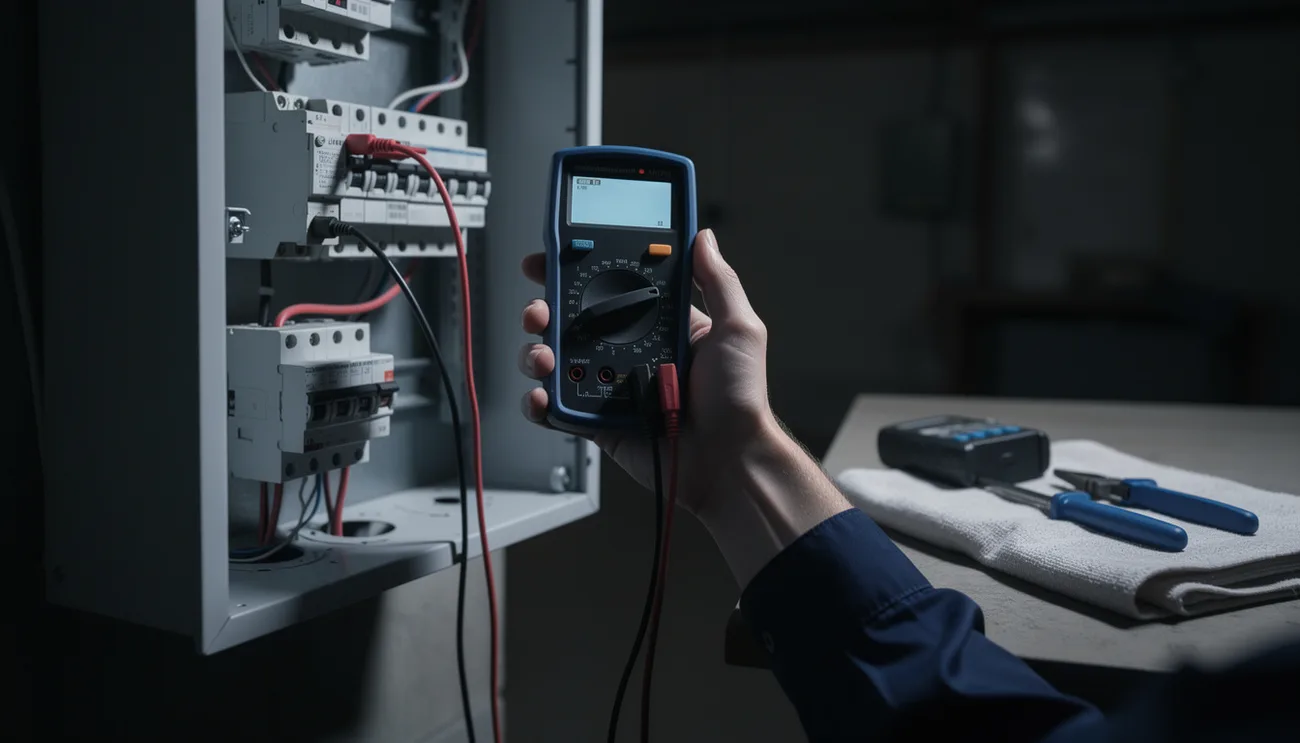 photo · circuit testing
Overload, short circuit, or ground fault: we identify which and fix the cause.
Loose connections, shared-circuit loads, and utility-side issues separated and solved.
Trace the break, repair the connection, restore the circuit safely.
Warning signs investigated before they become an emergency call.
Half the house dim or dead often points to a service issue. We diagnose and coordinate with your utility.
When it happens, what else is running, which rooms. The pattern narrows the search before we arrive.
Systematic testing from the panel outward until we find the actual fault, not just where it shows up.
You see what we found, what it means, and the flat price to fix it before any repair begins.
The three usual causes are an overloaded circuit (too much running at once), a short circuit (a wiring fault), or a ground fault (current leaking where it should not). Each has a different fix, which is why resetting it over and over is not a plan. Repeated tripping is the breaker doing its job and telling you something is wrong.
Sometimes. A single lamp flickering is usually the bulb or the fixture. Whole-room or whole-house flickering, especially when large appliances start, can indicate a loose connection at the panel or the service, and loose connections generate heat. That version is worth a call soon.
Intermittent faults are common and we plan for them. We reproduce the conditions (load on the circuit, the appliances involved) and test the likely failure points even when the symptom is hiding. The pattern you describe on the phone genuinely helps, so note when it happens.
The diagnostic visit is quoted up front when you book, so there is no meter running. Once we find the cause, the repair is quoted flat as a separate decision. You are never committed to a repair just because we diagnosed it.
Book a diagnostic. We will find the real cause.