Ontario EV Charger Rebates and Incentives: What Exists in 2026
As of mid-2026 there is no blanket provincial rebate for home EV charger installation in Ontario. What exists instead: utility-specific programs, zero-interest energy retrofit financing, and the ultra-low overnight electricity rate, which quietly outsaves most one-time rebates.
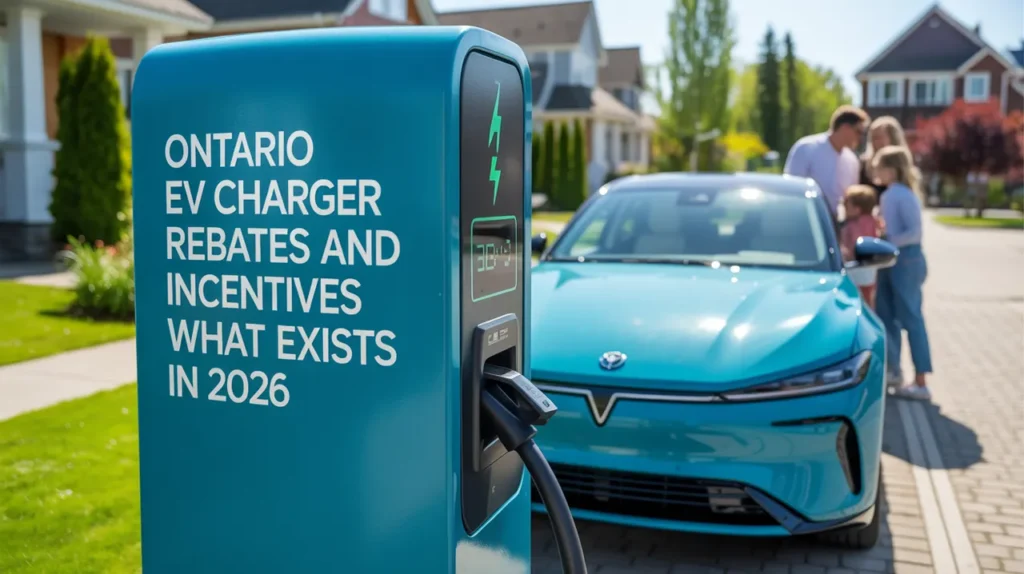
The State of the Ontario EV Charger Rebate in 2026
Start with the answer nobody enjoys writing: as of mid-2026, there is no province-wide Ontario EV charger rebate for home installations. The province has funded public and workplace charging through programs like ChargeON, and federal infrastructure funding has flowed to condos, businesses, and municipalities, but the single-family driveway has largely been left to pay its own way, and several earlier funding rounds are now fully subscribed and closed.
That is the headline, not the whole story. Money for home charging in Ontario now hides in three less obvious places, and stacked together they routinely beat the one-time rebates people are searching for. Everything below carries a mid-2026 date stamp for a reason: this corner of policy changes fast, and any program named here deserves a fresh look before you count on it.
| What exists in 2026 | Type | Who offers it |
|---|---|---|
| Demand-response charger incentives | Rebate or bill credits | Individual utilities, terms vary |
| Zero-interest home energy financing | Loan, not a grant | Federal and municipal programs |
| Ultra-low overnight rate plan | Ongoing bill savings | Province-wide through your utility |
| Workplace and condo charging funds | Infrastructure grants | Federal programs, building owners apply |
Utility Programs: Small, Local, and Worth Ten Minutes
Some Ontario utilities offer incentives for smart Level 2 chargers enrolled in demand-response networks, where the utility can briefly trim charging during grid peaks in exchange for a rebate or ongoing bill credits. Toronto Hydro has run exactly this model; other utilities cycle programs in and out as grid needs shift.
For Whitby and most of Durham Region, the utility is Elexicon, and program availability changes often enough that the only reliable source is their current website rather than any blog post, including this one. The ten-minute check goes: your utility’s EV or rebates page, then the enrolment terms, then the approved charger list, because demand-response programs only pay for hardware that speaks their protocol. If a program is live when you buy, choosing an approved charger costs nothing extra and leaves the door open.
Financing: The Unglamorous Program That Actually Exists
Zero-interest home energy retrofit financing has quietly become the most accessible public money in this space. Federal loan programs for home energy upgrades, repaid over terms as long as ten years at no interest, have covered bundles that include heat pumps, insulation, panel capacity, and in various rounds, EV-readiness work. Some municipalities layer their own local improvement financing on top.
Two cautions keep this honest. Eligibility lists change between program rounds, so confirm the current round covers your scope before counting on it. And a loan is cash-flow help rather than free money; its real value shows when the charger rides along with a bigger retrofit, where one application can finance the panel upgrade that enables the charger plus the charger itself, interest-free. For households already planning electrification, that bundling is genuinely significant.
The Incentive Nobody Calls a Rebate
Here is the arithmetic that makes the missing Ontario EV charger rebate matter less than it seems. The province’s ultra-low overnight electricity plan prices the hours between 11 p.m. and 7 a.m. at a small fraction of peak rates, around three cents per kilowatt-hour as of 2026. A typical EV battery filled entirely in that window costs about the price of a coffee, and a commuter charging nightly saves hundreds of dollars a year compared to charging on standard time-of-use pricing.
A one-time rebate pays once. The overnight window pays every night the car is plugged in, for as long as you own it, and capturing it requires exactly what a rebate would have bought anyway: a Level 2 charger fast enough to finish inside the discount hours, on a schedule the car or charger automates. Level 1 charging cannot reliably fit a real commute into the window, which converts the rate plan into the strongest financial argument for professional Level 2 installation that exists in this province.
Enrolment is a call to your utility, the rate applies to the whole house, and households that shift laundry and dishwashing overnight compound the savings further. The trade-off to weigh honestly: the plan’s weekday evening peak is priced higher than standard rates, so households that cannot move their heavy usage out of the dinner hours should run the comparison before switching rather than assuming the EV alone tips it.
Condos, Workplaces, and the Money That Did Flow
The infrastructure funding Ontario and Ottawa did spend went overwhelmingly to shared settings, and that matters even for house-dwellers reading this. If you or your household charges at a workplace, or you own a condo unit, the funding picture flips: federal infrastructure programs have covered meaningful portions of multi-unit and workplace charging projects, with the building owner or condo corporation as the applicant.
For condo owners, the practical move is bringing the program’s existence to your board rather than waiting for the board to discover it. Applications come from the corporation, projects take seasons rather than weeks, and units that get charging infrastructure gain resale value that individual owners cannot create alone. For employees, the equivalent move is one email to facilities asking whether workplace charging funding has been explored.
Neither route replaces a home charger for daily convenience, but both can shift where your kilowatt-hours come from, and a workplace plug at midday pairs surprisingly well with an overnight rate at home.
Vehicle Rebates Are a Different Conversation
One clarification prevents a common mix-up: rebates for buying the EV itself are separate programs from charger incentives, run on separate timelines, and the federal vehicle incentive has had well-publicized pauses and changes of its own. Nothing about vehicle purchase incentives changes the home charging picture in either direction.
The reason to keep them mentally separate is budgeting: a vehicle rebate arrives once at purchase, while charging costs run the life of the car. Buyers who fixate on the purchase-side incentive and skip the home charging setup routinely spend the savings on public fast charging within a couple of years, which is the most expensive electricity an EV can drink.
Keep the Paper, Whatever You Do
Programs in this space appear, fill, and close with little notice, and more than one Ontario homeowner has qualified for something retroactively because their paperwork was in order. The file worth keeping: the ESA permit certificate from the installation, the contractor’s itemized invoice, the charger’s model and serial numbers, and proof of any program enrolment.
The same file serves insurance, resale, and warranty claims, so it is not busywork even if no program ever materializes. Installations done properly generate all of it by default, which is one more reason the professionally installed, ESA-permitted charger is the only version worth buying, incentive or not.
The practical next step: check your utility’s current programs this week, decide whether the overnight rate suits your household, and get the installation quoted with program-ready hardware in the spec. If a rebate exists when you pull the trigger, you will catch it. If not, the overnight window starts paying you back on night one either way.
Frequently Asked Questions
Was there ever an Ontario rebate for home chargers?
Programs have come and gone. Federal and provincial charging infrastructure funds targeted workplaces, condos, and public sites, and several rounds were fully subscribed and closed. Home installations were rarely covered directly, which surprises a lot of buyers researching after the fact.
Do utility programs pause my charging?
Demand-response programs that offer charger incentives typically reserve the right to briefly slow or pause charging during grid peak events. In practice events are infrequent and overnight charging is rarely affected, but read the terms so the trade-off is one you chose knowingly.
Does the charger need to be installed by a licensed contractor to qualify for programs?
Every legitimate program requires professional installation with an ESA permit, and financing programs typically require receipts from a Licensed Electrical Contractor. Keeping the permit certificate and invoices together is the difference between qualifying and explaining.