How Much Does a Whole-Home Generator Cost, All-In?
As of 2026, a whole-home standby generator in Canada typically lands between roughly $7,500 and $11,000 installed for a 22 kW natural gas unit, covering the generator, automatic transfer switch, electrical and gas work, and permits. Site distances and unit size move the number in both directions.
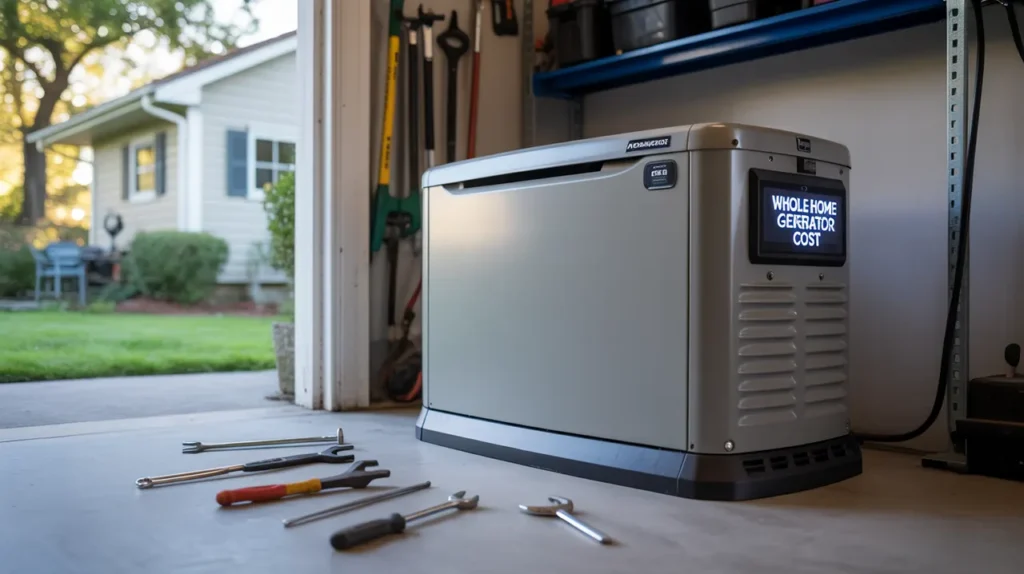
The Whole Home Generator Cost Picture in One Table
Straight to the point: whole home generator cost in Canada, as of 2026, runs roughly $7,500 to $11,000 installed for the most common configuration, which is a 22 kW natural gas unit paired with an automatic transfer switch. The hardware is only part of that figure, which is the single most useful thing to understand before collecting quotes.
| Component | Typical 2026 range | Notes |
|---|---|---|
| Generator unit, 22 kW class | $6,100 to $7,800 | Bundles with transfer switch price better |
| Larger units, 24 to 26 kW | $7,000 to $8,500 | For electrified or larger homes |
| Installation labour | $3,000 to $5,500 | Electrician plus licensed gas fitter |
| Permits and inspections | $200 to $500 | Electrical and gas, both required |
| Site extras | Varies | Long gas or conduit runs, trenching, pads |
Stack the middle rows and you see why installed quotes land where they do: the labour, the two licensed trades, and the coordination between them legitimately rival the machine itself. Any quote dramatically under the band has usually omitted the gas work, the permits, or the transfer switch integration, and you will meet the missing piece later, priced as a surprise.
Where the Installation Money Actually Goes
The transfer switch is the heart of the project, the reason the whole system works unattended, and the least glamorous line on the quote. It mounts beside your panel, watches for utility failure, starts the generator, and moves the house across in seconds, and integrating it properly is licensed electrical work under an ESA permit. Skimping on this component is how five-figure generators end up feeding houses badly for years.
The gas side is its own trade: a licensed gas fitter sizes and runs the fuel line from your meter, and distance is destiny for this line item. A generator placed near both the gas and electrical meters installs efficiently; one across the yard adds pipe, conduit, and possibly trenching, which alone can add a thousand dollars or more. Clearances from windows, doors, and property lines constrain placement too, so the economical spot and the legal spot need to be the same spot.
Then the quiet items: the pad the unit sits on, weatherproof disconnects, and the commissioning that proves the whole chain works before you need it. All of it belongs in a properly scoped generator installation, and all of it should be visible in the quote.
Sizing Is a Cost Decision Wearing a Technical Costume
The 22 kW default exists because it covers most gas-heated Canadian homes without load juggling, but your number should come from your own load calculation, not from the bestseller list or the neighbour’s driveway. A modest home with gas heat may be honestly served at 14 to 18 kW, saving real money on both unit and gas line sizing. A house with electric heat, a pool, or an EV in the plan may need the larger class or smart load management to avoid buying capacity twice.
This is the same demand calculation that governs panel and service sizing, applied to backup, and the full method lives in our generator sizing guide. The cost lesson compresses to one line: a right-sized unit with load management usually beats an oversized unit bought on fear, by thousands.
Worth flagging in the other direction: undersizing to hit a price point creates the generator that trips during the first real outage, and resizing after installation costs far more than sizing honestly the first time.
Timing and Lead Times: The Cost Nobody Prints
Whole home generator cost has a calendar dimension the spec sheets never mention. Demand for standby units spikes after every major regional outage, and the weeks following an ice storm see quoted lead times stretch from days to months while installers triage a season’s worth of panic purchases. Buying in the calm, typically late winter through early summer in Ontario, gets you choice of units, sane scheduling, and an installer with time to do the site planning properly.
Supply history backs the advice: the storm years of the past decade produced continent-wide backorders on popular unit sizes, and homeowners who ordered in the aftermath paid list price for hardware they waited a season to receive. The generator you buy before you need it costs less and arrives sooner than the one you buy because you needed it last week.
Financing has quietly improved the timing math too. Home energy financing programs and dealer terms spread the installed cost across years, and for households already planning electrical work, bundling the generator project with panel or service upgrades shares mobilization and permitting the same way every bundled electrical project does. None of that requires buying bigger than your load calculation says; it just rewards deciding on your own schedule instead of the weather’s.
The Costs of Ownership, and the Comparison That Matters
A standby generator is an appliance with an engine bolted to your house, and honest budgeting includes the whole life of that engine. Annual professional service, oil and filter changes, and periodic battery replacement run a few hundred dollars a year; the weekly self-test sips fuel; a natural gas unit under load consumes meaningfully during long outages, which is still a bargain against a freezer of spoiled food and a night in a hotel.
The comparison most buyers actually need is not generator versus nothing; it is standby versus the portable-plus-interlock path covered in our standby versus portable guide. For a fraction of the cost, that path keeps essentials alive at the price of manual effort. What the whole-home premium buys, concretely, is automation, full coverage, and protection while you are away, and households should pay it for those reasons rather than by default.
Resale rounds out the math: permanently installed, permitted backup power has become a named feature in Durham listings after every well-publicized outage season, and the ESA and gas paperwork transfers to the buyer with the house in a way no receipt for a portable ever will. Buyers do not pay full replacement value for it, but they remember which of two similar houses kept its lights on.
Getting to Your Number Without a Sales Visit
The whole home generator cost your house actually carries is knowable before any salesperson visits, and you can pre-scope it with a tape measure and a phone. Photograph your electrical panel and meter, your gas meter, and the wall or corner where a unit could legally live, then pace off the distances between them. Note your heat and hot water fuels and any big electrical plans coming. That folder answers ninety percent of what sets your price.
Send it to any reputable installer, including us, and the reply should be a firm installed figure: unit, transfer switch, gas work, pad, permits, commissioning, one number. Collect two or three such numbers and you are comparing projects rather than guessing at omissions, which is exactly the position a five-figure purchase deserves. The photos take ten minutes; take them before storm season fills every installer’s calendar.
Frequently Asked Questions
Why does the installed price double the unit price?
Because the unit is only half the project. The automatic transfer switch integration, the gas line run by a licensed gas fitter, the concrete or composite pad, the electrical work, and the permits together routinely match the hardware cost. Quotes that show only the unit price are showing you half a project.
Natural gas or propane for the fuel?
Where a natural gas line already serves the house, it wins on convenience: no tank, no refills, indefinite runtime. Propane suits rural properties beyond the gas grid, adds tank rental or purchase to the budget, and stores energy on-site, which some owners count as a feature during regional emergencies.
What does a standby generator cost to run and maintain?
Budget a few hundred dollars annually: a professional service visit, oil and filters on schedule, and a battery every few years, plus modest gas consumption from the weekly self-test. Neglecting the schedule is the classic way a five-figure machine fails its one job.